


Match transactions in their original currency before anything else. Converting first, then matching, hides the very timing and rate discrepancies you’re trying to catch. Once the original-currency amounts tie out, decide your posting rate: use the bank settlement rate if cash accuracy matters most, or keep the booking rate and post the difference as a separate FX variance line.
Two controls make this audit-proof from day one:
- Rate source discipline: record which rate you pulled (ECB, bank, spot) and the timestamp, every time.
- Tolerance logging: any match accepted within a threshold gets written down, with the variance amount and the reason.
Key Takeaways
Reliable multi currency reconciliation depends on matching original-currency amounts first, logging every rate source and tolerance hit, and posting FX adjustments only after matching is confirmed.
| Point | Details |
|---|---|
| Match before converting | Always reconcile original-currency amounts first; converting early hides genuine timing and rate discrepancies. |
| Capture six core fields | Record amount, currency code, booking rate, settlement rate, value date, and reference ID on every transaction. |
| Use tiered tolerances | Combine an absolute threshold for small transactions with a percentage threshold for large ones, and log every hit. |
| Follow IAS 21 disclosure rules | Document your rate policy for initial recognition and revaluation, since IAS 21 requires it explicitly. |
| Automate the repetitive steps | Zenith-books automates OCR capture, currency-first matching, and tolerance logging to cut close times and manual entry. |
Table of Contents
- What is multi currency reconciliation and why does it trip people up?
- How do you set up accounts for multi currency accounting?
- What’s the right order for matching multi currency transactions?
- How do you record FX adjustments, and what does IAS 21 require?
- How tight should your matching tolerances be?
- Which automation features actually cut reconciliation workload?
- How do you investigate reconciliation exceptions properly?
- What month-end checks keep multicurrency reporting clean?
- How does automated matching change the reconciliation workload?
- What finance teams consistently get wrong with multi currency reconciliation
- Let Zenith-books handle the matching so you handle the exceptions
- Frequently asked questions
- Sources
What is multi currency reconciliation and why does it trip people up?
Multi currency reconciliation is the process of matching transactions recorded in different currencies against bank statements, ledgers, or intercompany accounts, then explaining any residual difference as a genuine exchange-rate movement rather than an error. It sounds simple until you’re staring at a EUR receipt that landed as GBP in the bank feed three days later at a different rate than the invoice was booked.
The discipline actually splits into three related but distinct jobs:
- Bank reconciliation: matching bank statement lines against ledger cash entries, currency by currency.
- Ledger reconciliation: confirming that subledgers (accounts receivable, accounts payable, intercompany loans) agree with the general ledger after translation.
- Intercompany reconciliation: matching balances between related entities that trade in each other’s home currencies, where rate differences compound quickly.
Most mismatches come from three sources: timing (the payment clears days after the invoice date), rate source (your ledger uses a booking rate, the bank uses its own settlement rate), and fees (a £4,000 wire arrives as £3,986 because the bank took a cut before you saw it). None of these are errors in the accounting sense. They’re just the normal friction of moving money across borders, and a decent invoice reconciliation process should expect them rather than treat every one as an exception.
How do you set up accounts for multi currency accounting?
Get the base currency decision right before you process a single transaction, because unpicking it later means restating months of reports. Your base currency (sometimes called functional currency) is the currency your entity actually operates in — where it collects revenue and pays most costs. Your presentation currency is what you report in if that differs, typically for group consolidation. Document both choices and the reasoning, because auditors will ask.
Every transaction needs six data fields captured at source, not reconstructed later:
- Original amount in the transaction currency.
- Currency code (ISO 4217, so EUR not “euros”).
- Booking rate used when the transaction was recorded.
- Settlement rate applied when cash actually moved.
- Value date distinct from the invoice date.
- Reference ID that survives across systems, not just within one.
Standardise your rate sources and time stamps across every system touching the transaction. If your accounts payable tool pulls a rate at 9am and your bank feed settles against a rate from 3pm, you’ve built in a variance before anyone’s made a mistake.
Pro Tip: Store the rate source and pull time as a separate metadata field, not buried in a memo line. When an auditor asks why two “identical” transactions show different rates, you want an instant answer, not an afternoon of detective work.
What’s the right order for matching multi currency transactions?
Run matching in a fixed sequence, and don’t skip ahead to fuzzy matching before you’ve exhausted the exact matches. The structured process that works best across most finance teams looks like this:
- Exact match in original currency first. Dollar-to-dollar, euro-to-euro. Never convert before this pass. A $10,000 invoice against a $10,000 receipt is a match regardless of what either figure becomes once translated.
- Batch or group matching for split settlements. A single €50,000 invoice paid in three tranches of €20,000, €18,000, and €12,000 needs a rule that sums the group and matches it against the original, not three separate failed attempts at a one-to-one match.
- Fuzzy or tolerance matching for the genuine leftovers: rounding, small fee deductions, minor rate timing gaps. This is where you apply thresholds, not intuition.
- Post FX adjustments only after matching is complete. Never post a variance against an unmatched or partially matched item.
The order matters because posting FX adjustments too early corrupts your audit trail. If you convert and post before matching, you can no longer prove the underlying transactions actually correspond to each other. Reviews of cross-border reconciliation practice consistently point to tolerance-based matching with automated exception logging as the difference between a close that takes hours and one that takes days.
A tolerance rule generally combines two tests: an absolute value (say, £5) and a percentage (say, 0.5% of transaction value), and a match passes if it falls within either threshold. That “either/or” logic is what stops large transactions generating disproportionate false exceptions while still catching genuine errors on small ones. Set both, log every pass that relied on tolerance rather than an exact figure, and you’ve got a defensible trail instead of a black box.
How do you record FX adjustments, and what does IAS 21 require?
Once matching is done, the leftover difference between the booking rate and the settlement rate becomes your FX adjustment. Calculate it as the settlement amount minus the originally booked amount, both expressed in your base currency. If that figure is positive, you’ve realised a gain; if negative, a loss.
The typical journal treatment:
- Debit or credit the bank/cash account for the actual settled amount in base currency.
- Debit or credit accounts receivable or payable to clear the original booked amount.
- The balancing entry goes to a realised FX gain or loss account.
Unrealised gains or losses arise differently: they come from revaluing open balances (an unpaid invoice still sitting in a foreign currency) at the period-end rate, without any cash movement. That revaluation reverses the following period when the balance either settles or gets revalued again.
Whether you use the bank settlement rate or keep the original booking rate for posting has real consequences. Settlement rates give you a bank balance that ties exactly to what the bank shows. Booking rates preserve the original transaction economics but mean your cash reconciliation will always carry a small FX variance line to explain.
IAS 21 requires that exchange differences arising on settlement of monetary items, or on translating monetary items at rates different from those at initial recognition, are recognised in profit or loss in the period they arise, with specific disclosure of translation methods and rate sources used.
That’s not a footnote you can skip. IAS 21 expects your accounting policy note to state which rate you use for initial recognition, which for period-end revaluation, and how translation differences flow through the accounts. Write that policy down once, apply it consistently, and your auditors will spend less time asking questions.
How tight should your matching tolerances be?
A two-tier tolerance structure handles most currency reconciliation volume without drowning your team in false exceptions. Set an absolute threshold for smaller transactions and a percentage threshold for larger ones, because a flat percentage on a £50 transaction and a flat percentage on a £500,000 transaction behave completely differently.
A reasonable starting point includes an absolute tolerance of a few currency units for smaller transactions and a small percentage tolerance for larger transactions.
- Automatic escalation: anything outside both thresholds routes straight to manual review, no exceptions.
Log every tolerance hit with the variance amount and the reason, whether that’s “bank fee,” “rate timing,” or “rounding.” Auditors increasingly expect to see evidence that you’ve tuned these thresholds over time rather than set them once and forgotten them, and a documented log of tolerance-based matches makes that case for you without a single conversation.
Pro Tip: Review your tolerance settings quarterly, not annually. If a particular bank consistently deducts a fixed fee, tighten the absolute threshold and let the automation catch the pattern instead of a human re-approving the same £3.50 variance every month.

Which automation features actually cut reconciliation workload?
Not every feature marketed as “automation” earns its place. The ones that genuinely move the needle on multi currency accounting workload are narrower than the marketing suggests:
- Statement ingestion across formats: CSV, API feeds, and MT940 for bank-grade files, so you’re not manually re-keying anything.
- Original-currency matching as the default, not an afterthought bolted onto a base-currency-first system.
- Configurable tolerance rules that you can adjust per account or per currency pair, not a single global setting.
- Exchange-rate history retained and searchable, so you can answer “what rate did we use on 14 March” without digging through emails.
- Exception ticketing that timestamps every unmatched item and tracks it through to resolution.
On the integration side, three things matter more than the rest: a ledger connector that doesn’t require manual export/import cycles, a configurable rate-source matrix so you can specify ECB for one entity and bank rate for another, and an API for bank feeds that updates in near real time rather than overnight batches.
Before switching any of this on, standardise your import formats and normalise your reference fields across systems. A tool can only match well if the data arriving from your bank and the data sitting in your ledger use the same reference conventions. Automating a mess just produces a faster mess, so preparing your data capture properly first pays for itself many times over.

How do you investigate reconciliation exceptions properly?
Split exceptions into categories the moment they appear, rather than treating every unmatched line the same way. Timing differences, rate variances outside tolerance, genuine bank errors, and duplicate entries each need a different response.
The investigation workflow that holds up under audit scrutiny runs in a fixed order:
- Enrich the data: pull in the reference ID, original booking rate, and counterparty details.
- Check references against the original invoice or contract.
- Query the bank or counterparty directly if the reference doesn’t resolve the gap.
- Correct the entry or book a formal adjustment, never both without documenting which.
Every step needs a timestamp, a ticket number, and a note on the variance amount. That log is your audit trail, and it’s what turns “we think this is fine” into “here’s exactly why this is fine,” with a paper trail an external auditor can follow without asking you to explain it twice.
What month-end checks keep multicurrency reporting clean?
Reconcile each currency separately before you translate anything into your reporting currency. Mixing that step order hides exactly which currency is causing a variance, and it makes the fix take twice as long.
Before you close the books, run through this checklist:
- Snapshot the exchange-rate matrix you used for the month, including source and pull time for every rate applied.
- Report all unreconciled aged items separately, by currency and by age bracket, rather than netting them into a single figure.
- Review FX gain/loss accounts for anything that looks structurally wrong, not just large in value.
- Confirm intercompany elimination status before consolidation, since unreconciled intercompany balances in different currencies are one of the most common causes of a delayed close.
Reconciling currency by currency first, then translating, keeps the underlying timing and rate differences visible right up until consolidation, which makes the final adjustment a formality rather than a scramble.
How does automated matching change the reconciliation workload?
Mapped against the workflow above, automation earns its place at four specific points: OCR invoice capture that extracts the original currency and amount without manual re-keying, matching that defaults to original currency rather than a pre-converted figure, configurable tolerance tiers that apply per account, and an audit log that timestamps every match automatically.
Zenith-books’ clients illustrate what that looks like in practice. Združenje YES and BAM Chocolate both report reduced month-end close times and zero manual entry across their transactions after automating invoice capture and matching.
The pattern that shows up across finance teams switching to automated matching: a close process that used to run five to seven working days into month-end starts landing within two to three, mostly because exception volume drops once original-currency matching and tolerance rules run automatically instead of by hand.
What finance teams consistently get wrong with multi currency reconciliation
The mistakes I see repeated most often aren’t complicated. They’re small process gaps that compound. Teams use one rate source for booking and a completely different one for period-end revaluation, without ever writing down why, so nobody can explain a variance six months later. Bank fees get captured late, often only when someone notices the cash balance doesn’t tie, which pushes the whole investigation into the following period. And shared bank accounts across multiple entities get split retroactively at month-end, when the honest fix is tagging the originating entity the moment the transaction happens.
The practical shortcuts are almost embarrassingly simple by comparison. Tag entity origin at initiation, not reconstruction. Standardise your import formats before you automate anything, because a tool matching against inconsistent references will always underperform a human doing it by eye. And use tiered tolerance rules rather than a single flat threshold, because a flat rule either lets through too much noise on small transactions or flags too much on large ones. None of this requires new technology. It requires deciding these things once, writing them down, and actually following the decision.
Let Zenith-books handle the matching so you handle the exceptions
If you’ve read this far, you already know the manual version of this process works, but automation significantly reduces the time involved every month by automating OCR capture of currency and amounts, using currency-first matching as the default, and applying tolerance rules automatically.
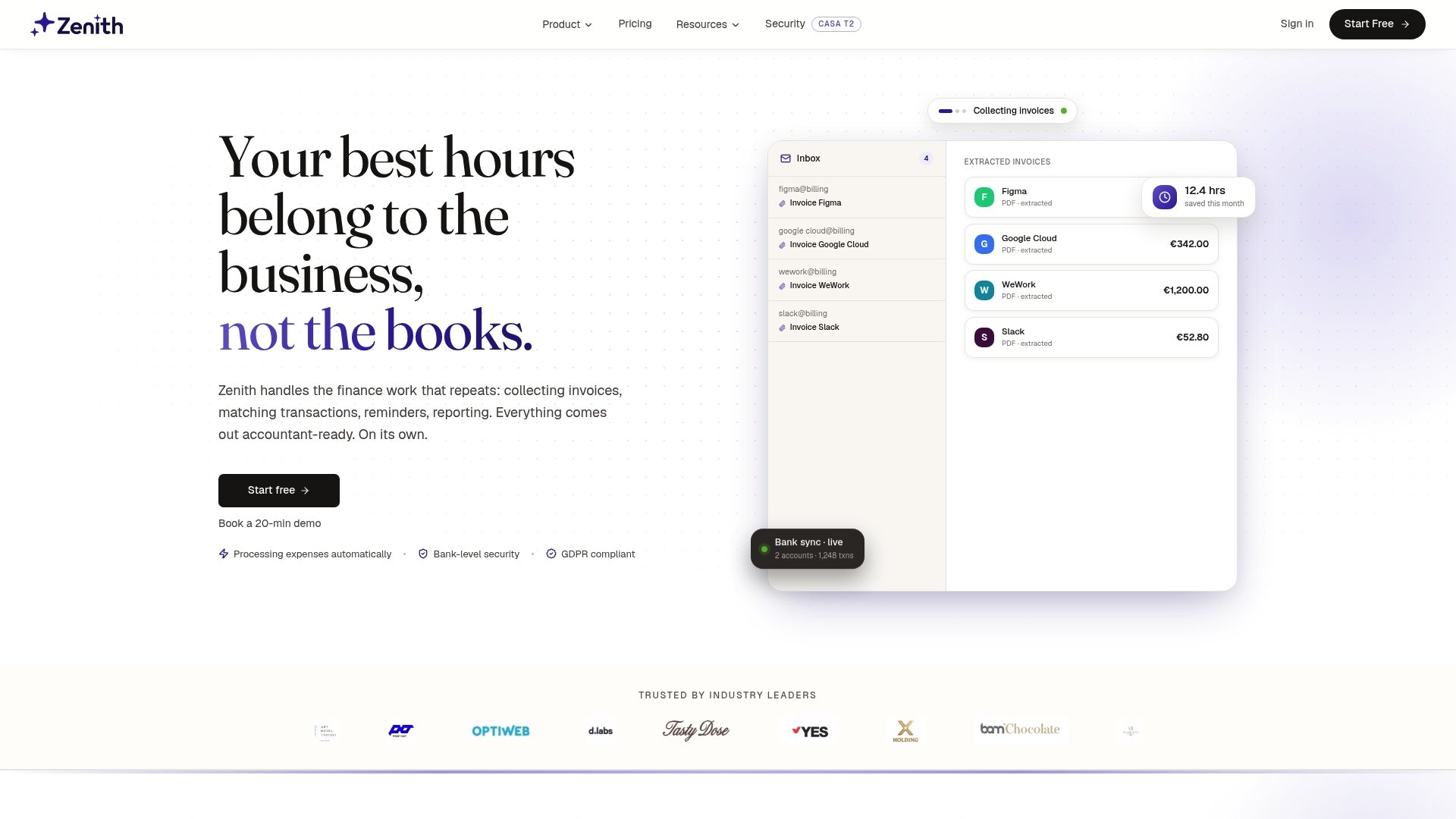
Where it helps most is the finance team drowning in cross-border volume with no dedicated treasury function to build custom tolerance logic from scratch. You get unified cash balances across every account and currency in one view, with the audit log building itself as matches happen rather than as a separate task afterwards.
The quickest way to see whether it fits your workflow is to test the OCR capture against a real batch of your own invoices, or look through the full reconciliation and matching setup to see how the tolerance rules configure against your existing accounts.
Frequently asked questions
What is the first step in multi currency reconciliation? Match transactions in their original currency before converting anything. This catches genuine discrepancies rather than masking them behind a conversion applied too early.
Should I use the bank settlement rate or the booking rate for FX postings? Use the settlement rate if cash accuracy against your bank balance matters most; keep the booking rate and post a separate FX variance line if you want to preserve the original transaction economics. Document whichever you choose as policy.
Which exchange rate source should finance teams use? Most teams standardise on ECB reference rates or their bank’s own settlement rate, with GOV.UK rates specifically for UK customs and VAT reporting. Consistency across systems matters more than which specific source you pick.
How do I handle timing differences between invoice date and payment date? Treat them as a distinct exception category, not an error. Batch or fuzzy matching rules, applied with a documented tolerance, typically resolve these without manual intervention.
What records do auditors expect for multi currency reconciliation? A logged rate source and timestamp for every conversion, a record of every tolerance-based match with its variance amount and reason, and a documented accounting policy consistent with IAS 21’s disclosure requirements.
Sources
For the accounting framework behind exchange differences, consult IAS 21 directly. For rate sourcing, the European Central Bank’s reference rates and Gov cover the two most commonly cited official sources. For matching mechanics, see this step-by-step reconciliation workflow and nostro/vostro reconciliation best practice.
- European Central Bank — reference rates and methodology
- Currency reset: How to reconcile bank and custodian records step-by-step
- Best practices for cross-border nostro/vostro reconciliation (Reconwizz)